Rosacea: diagnosis and current treatment
What is rosacea?
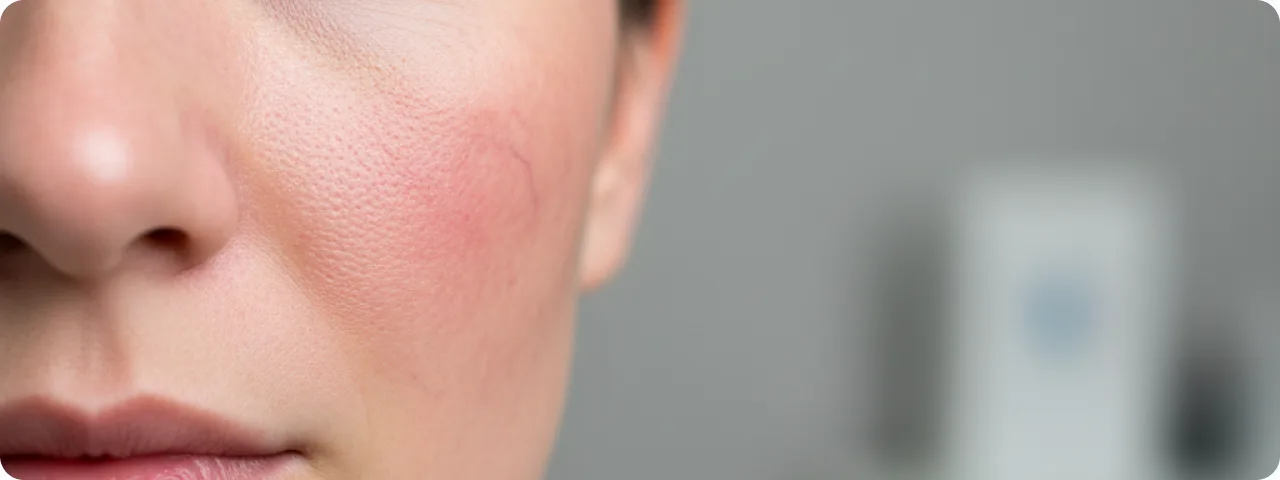
Rosacea is a chronic inflammatory disease of the facial skin, characterised by persistent redness, dilated vessels (telangiectasias), papules and pustules. It mainly affects the central part of the face — the nose, cheeks, chin and forehead. Rosacea is more common in fair-skinned people between the ages of 30 and 50 and runs a chronic course with periods of flare and remission.
Causes and triggers
The precise aetiology of rosacea is still the subject of research, but several key factors are known to provoke the development and flaring of the disease:
- vascular dysfunction: impaired regulation of the tone of the facial skin vessels leads to persistent dilation of the capillaries and to redness.
- the immune response: excessive activation of innate immunity and increased production of antimicrobial peptides (cathelicidins) causes inflammation.
- Demodex folliculorum: an increased number of demodex mites in the hair follicles is a characteristic feature of rosacea and sustains the inflammatory process.
- external triggers: ultraviolet radiation, abrupt changes in temperature, spicy food, alcohol, stress and intense physical exertion.
Clinical presentation
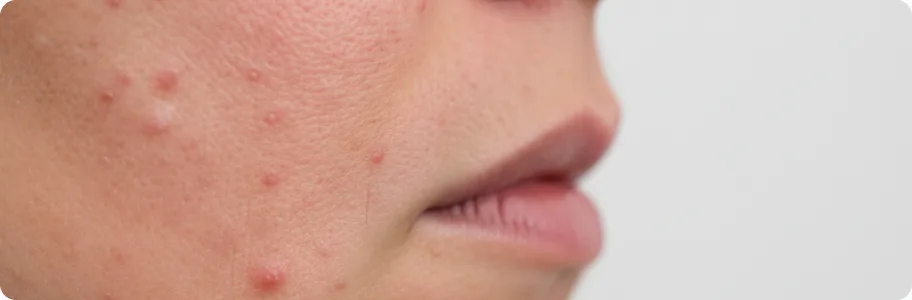
Rosacea has four main subtypes: erythematotelangiectatic (persistent redness and a network of vessels), papulopustular (inflammatory lesions resembling acne), phymatous (thickening of the skin, mainly of the nose — rhinophyma) and ocular (involvement of the eyes with redness, dryness and burning). An individual patient may have features of several subtypes at once.
Diagnosing rosacea
Rosacea is diagnosed clinically on the basis of characteristic phenotypic features, according to the criteria of the National Rosacea Society (NRS). The mandatory diagnostic criterion is persistent centrofacial erythema that intensifies under the influence of triggers. Dermatoscopy allows polygonal vessels to be visualised. Microscopic examination of skin scrapings determines the density of Demodex mites. Skin biopsy is performed rarely — only to distinguish rosacea from systemic lupus erythematosus or sarcoidosis.
Current treatment
Treatment of rosacea is comprehensive and long-term. Topical treatment includes metronidazole, ivermectin and azelaic acid, which reduce inflammation and the number of Demodex. In the papulopustular form, low-dose doxycycline (40 mg/day) is prescribed for its anti-inflammatory effect. Vascular features are treated with brimonidine and with laser procedures (IPL, PDL). Phymatous change requires surgical or laser remodelling. Daily sun protection at SPF 30+ is an essential part of treatment.
Advice for patients
To keep rosacea under control it is recommended to keep a diary of triggers, to avoid harsh cleansers, to use gentle alcohol-free products with a neutral pH, to apply sunscreen every day without fail, to limit spicy food and alcohol, and to continue the prescribed maintenance treatment even during periods of remission.
Related reading
Did not find the answer to your question?
Every case is individual. If you have noticed changes in your skin, or have symptoms that concern you, book a consultation.