Food allergens and eczema: what to exclude from the diet
The link between food and eczema
Atopic dermatitis (eczema) is a chronic inflammatory skin disease affecting up to 20% of children and 3–5% of adults. Research shows that in 30–40% of cases of childhood eczema, food allergens act as a trigger for flares. The mechanism is an immune response: IgE antibodies react to food proteins and set off a cascade of inflammatory reactions that appear on the skin as itching, redness and rashes. It is important to understand that food is not the cause of eczema, but it can substantially worsen its course in sensitised patients.
The main food allergens
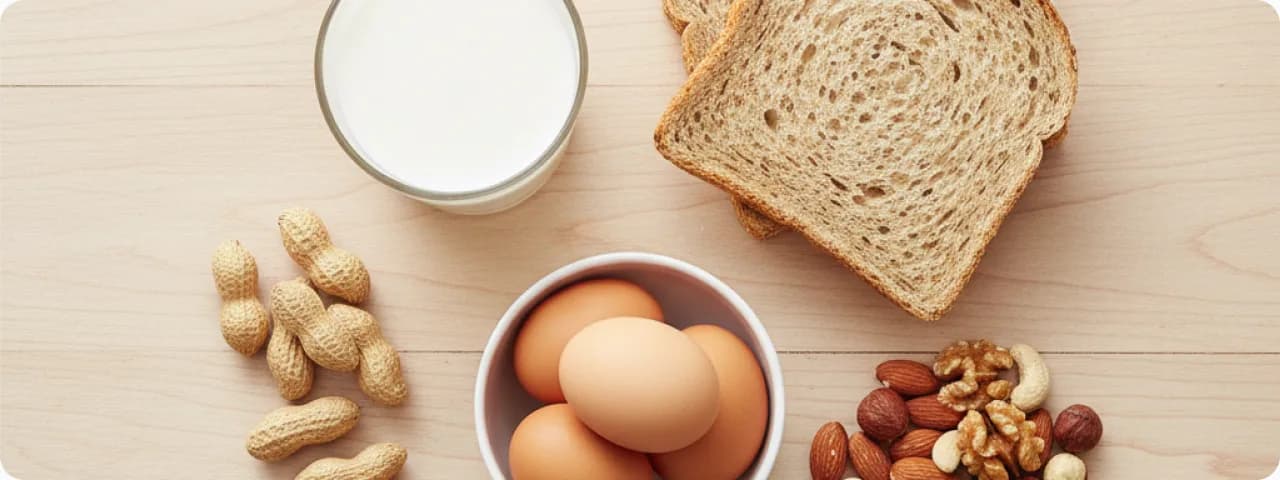
Research shows that 90% of food allergic reactions in eczema are caused by eight main groups of foods:
- cow's milk: the most common allergen in children with eczema. Casein and whey proteins (β-lactoglobulin, α-lactalbumin) cause both immediate and delayed reactions. Besides milk, they are in cheese, yoghurt, ice cream, baked goods and many convenience foods. Alternatives: oat, coconut and almond milk.
- hen's eggs: the second most common allergen. Ovomucoid is heat-stable, so even boiled eggs can cause a reaction. Eggs are hidden in mayonnaise, pasta, breadcrumb coatings and some vaccines. Where the allergy is only to ovalbumin, cooking is enough — baked goods containing eggs may be tolerated.
- wheat and gluten: gluten proteins (gliadin) can sustain chronic inflammation of the skin. Exclusion needs care: wheat is present in bread, pasta, sauces, beer, and even in some cosmetics. Gluten-free grains: rice, buckwheat, quinoa, amaranth, millet.
- peanuts and tree nuts: powerful allergens capable of provoking both cutaneous and systemic reactions. Cross-reactivity between peanuts and tree nuts occurs in 30–40% of cases. Hidden sources: Asian sauces, energy bars, ice cream, marzipan.
How to identify a food trigger
The gold standard of diagnosis is an elimination diet followed by a challenge. For 4–6 weeks the suspected food is removed from the diet completely while the state of the skin is recorded in a diary. If symptoms improve, the food is reintroduced under a doctor's supervision — a flare confirms the link. Skin prick tests and specific IgE testing help narrow the field of suspected allergens, but they are not a diagnosis in themselves: a positive test without clinical signs is sensitisation, not allergy. Do not exclude foods on laboratory results alone without consulting an allergist.

How to build an elimination diet
An elimination diet is not fasting but strategic substitution. Step 1: with an allergist, decide which foods to exclude on the basis of the history and the tests. Step 2: find a full replacement for every excluded food so that no nutrient deficiency develops. If you give up milk, secure calcium (broccoli, almonds, fortified plant milk) and vitamin D. If you exclude eggs, find alternative sources of protein and choline. Step 3: keep a food diary, recording everything eaten and the state of the skin. Step 4: after 4–6 weeks, if there is no improvement, bring the excluded foods back — unnecessary restrictions do more harm than good.
Anti-inflammatory eating with eczema
As well as excluding triggers, it is worth enriching the diet with anti-inflammatory foods. Omega-3 fatty acids (oily fish, flaxseed, walnuts) lower pro-inflammatory cytokines. Probiotics (sauerkraut, kimchi, kefir — if there is no milk allergy) support a healthy gut microbiome, which is linked to the state of the skin. Vitamin D regulates the immune response, and a deficiency correlates with the severity of eczema. Quercetin (apples, onions, capers) acts as a natural antihistamine. Zinc (pumpkin seeds, chickpeas) speeds up skin healing. Avoid processed foods high in histamine — aged cheeses, smoked foods, tinned foods, alcohol and fermented sauces.
When to see an allergist
See an allergist if your eczema flares after particular foods, if an elimination diet produces no result within 6 weeks, if you suspect multiple food allergies, or if a child with eczema is gaining weight slowly or shows signs of undernutrition. Do not put yourself on a restrictive diet without advice — excluding whole food groups without grounds can lead to deficiencies of calcium, iron, zinc and B vitamins.
Related reading



Did not find the answer to your question?
Every case is individual. If you have noticed changes in your skin, or have symptoms that concern you, book a consultation.