HIV and STIs: how they affect each other, and combined prevention

Contents
What is HIV infection and what is its place among STIs?
HIV infection is a chronic disease caused by the human immunodeficiency virus, which attacks the cells of the immune system (CD4+ T lymphocytes), progressively reducing the body's ability to resist infection and cancer. According to WHO data, more than 39 million people worldwide are living with HIV, and around 1.3 million new infections are recorded each year. In Ukraine, as of 2025, more than 260 thousand people are registered as HIV-positive. The close link between HIV and other sexually transmitted infections (STIs) — syphilis, gonorrhoea, chlamydia, genital herpes, trichomoniasis and human papillomavirus — is particularly important. Having any STI increases the risk of acquiring HIV 2–5 times, because inflammation breaches the integrity of the mucous membranes and draws precisely the cells that HIV targets into the site of infection. At the same time, HIV infection weakens local immunity, which leads to a more severe course of STIs, more frequent recurrences and more complications. This mutual influence makes combined prevention of both categories of infection a critical public health strategy.
How HIV and STIs influence each other
The interaction between HIV and STIs runs in both directions and increases the risks of both through several mechanisms:
- Ulcerative STIs (syphilis, genital herpes, chancroid): create an entry point for HIV — breaching the skin and mucous membranes gives the virus direct access to the bloodstream. Genital herpes increases the risk of acquiring HIV 2–4 times even between recurrences, because of chronic subclinical inflammation. Primary syphilis with a typical chancre increases the risk of HIV transmission 5 times. In HIV-positive people these infections run an atypical course, with larger ulcers and prolonged healing, which lengthens the window of infectivity.
- Non-ulcerative STIs (gonorrhoea, chlamydia, trichomoniasis): cause an inflammatory reaction in the mucous membranes of the urogenital tract with a massive influx of CD4+ cells — HIV's main targets. Gonococcal or chlamydial cervicitis or urethritis raises the concentration of HIV in genital secretions 3–8 times, which considerably increases the risk of transmitting the virus to a sexual partner. Trichomoniasis, the most common non-viral STI in the world, doubles the risk of acquiring HIV in women.
- The effect of HIV on the course of STIs: immunosuppression in HIV infection alters the clinical picture of many STIs — atypical forms of syphilis (malignant syphilis, neurosyphilis at early stages), warts in HPV infection that resist standard treatment, and severe recurrent genital herpes with ulcerative and necrotic lesions. Accelerated progression of HPV-associated pre-cancerous change in the cervix and anal canal calls for more frequent screening.
- Biological amplification of HIV replication: any STI activates the immune response, which paradoxically stimulates HIV replication at the site of inflammation. This raises the viral load both in the blood and in genital secretions, even in patients on antiretroviral therapy (ART). Successfully treating an STI lowers the HIV viral load in genital secretions, which underlines the importance of diagnosing and treating co-infections in good time.
Diagnosis: combined screening for HIV and STIs
Given the close relationship between HIV and STIs, current protocols recommend combined screening. HIV testing: fourth-generation rapid tests (Ag/Ab combo) detect infection as early as 2–4 weeks after exposure with a sensitivity above 99.5%. The confirmatory test is an immunoblot or PCR for HIV RNA. STI testing: PCR panels detect chlamydia, gonorrhoea, trichomoniasis, mycoplasma and HPV simultaneously from a single sample; serology for syphilis (RPR/VDRL plus TPHA/ELISA); type-specific serology for HSV-1/2. Who and how often: everyone who is sexually active — at least once a year; men who have sex with men — every 3–6 months; people with multiple sexual partners, sex workers and people who inject drugs — every 3 months; and at every consultation about any STI — testing for HIV and syphilis without exception. Antenatal screening includes testing for HIV, syphilis, hepatitis B and C, chlamydia and gonorrhoea in the first and third trimesters.
Combined prevention of HIV and STIs
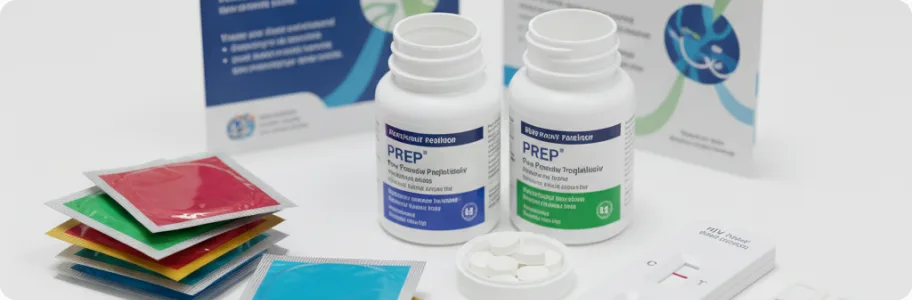
A combined prevention strategy brings together biomedical, behavioural and structural components. Barrier contraception: consistent and correct condom use reduces the risk of HIV transmission by 80–90% and of most bacterial STIs by 50–70%. Pre-exposure prophylaxis (PrEP): daily tenofovir/emtricitabine reduces the risk of acquiring HIV by 92–99% when taken regularly; injectable cabotegravir (CAB-LA) every 2 months is an alternative for people who find a daily regimen difficult, with effectiveness of up to 89%. Post-exposure prophylaxis (PEP): a 28-day course of ART started within 72 hours of a potential exposure to HIV reduces the risk of infection by more than 80%. Treatment as prevention (TasP): achieving and maintaining an undetectable HIV viral load on ART completely eliminates sexual transmission of the virus (the U=U principle — undetectable equals untransmittable). Vaccination: against HPV (Gardasil 9) — protection against 9 HPV types, recommended between the ages of 9 and 26; against hepatitis B — for everyone who is HIV-negative and as part of the vaccination schedule. Behavioural strategies: reducing the number of sexual partners, avoiding concurrent partnerships, and stopping injecting drug use or using sterile equipment.
Treating HIV infection and its effect on co-existing STIs
Antiretroviral therapy (ART) is the basis of HIV treatment. Modern regimens based on integrase inhibitors (dolutegravir, bictegravir) combined with two NRTIs achieve viral suppression quickly with minimal side effects. Starting ART early — immediately after diagnosis — improves immune recovery and reduces both the risk of transmitting HIV and the severity of STIs. Particular features of treating STIs in HIV-positive people: syphilis may require longer courses of penicillin and closer serological follow-up; genital herpes often requires higher doses of antivirals and longer suppressive therapy; warts in HPV infection are more resistant to treatment and recur more often, requiring a combined approach (destruction plus immunomodulation). Immune recovery on ART (CD4+ above 350 cells/µl) improves the response to STI treatment and reduces the frequency of recurrence. Monitoring interactions between ART and drugs used to treat STIs is essential: metronidazole, rifampicin and some antifungals can affect antiretroviral drug levels.
When to see a doctor
See an infectious diseases specialist or dermatovenerologist for any unusual genital discharge, ulcers or rashes in the genital area — these may be signs of an STI, which increases vulnerability to HIV. Get tested for HIV if you have had unprotected sex with a partner whose HIV status is unknown, or if any STI has been diagnosed. Seek PEP (post-exposure prophylaxis) urgently within 72 hours of a possible exposure to HIV — at an emergency department, an AIDS centre or from an infectious diseases specialist. Have regular screening: annually for everyone who is sexually active, and every 3–6 months for higher-risk groups. If you are living with HIV, tell your doctor about any new symptoms — an atypical STI in immunosuppression can be mistaken for other conditions. Remember: modern medicine allows people with HIV to live a full and long life, and combined prevention protects effectively against infection. Starting treatment early and screening regularly are the best tools for protecting your health.
Related reading


Did not find the answer to your question?
Every case is individual. If you have noticed changes in your skin, or have symptoms that concern you, book a consultation.